
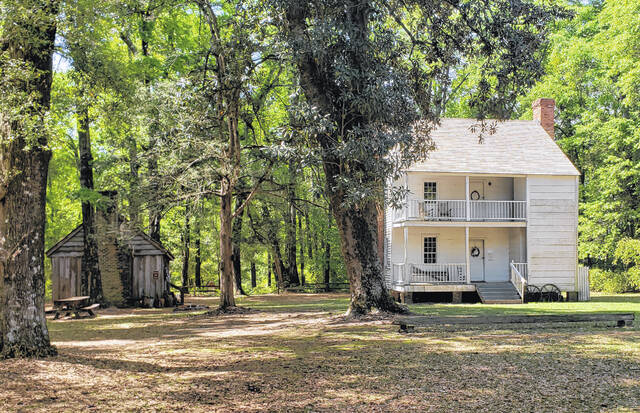
This year, southeastern North Carolina will come alive with history, music, living history, and celebration as communities from eight counties unite for the North Carolina First in Freedom Festival, a week-long commemoration marking America’s 250th anniversary and the pivotal events that helped shape our nation. The festival runs February 21–28, 2026, with activities across the region, featuring a Colonial Faire at Harmony Hall in Bladen County and culminating in the 250th anniversary of the Battle at Moores Creek National Battlefield.
In 1776, on February 27, a decisive clash at Moore’s Creek Bridge in what is now Pender County helped turn the tide for American independence. Patriot militia forces routed Loyalist troops in a brief but dramatic engagement; this victory strengthened resolve in North Carolina and helped make it the first colony authorized to instruct its delegates to the Continental Congress to vote for independence.
Bladen County’s Revolutionary Roots
Though Moore’s Creek itself lies outside Bladen County, Bladen’s citizens were deeply tied to the struggle for freedom. Notably, Colonel Thomas Robeson, born in Bladen County in 1740, rose as a Patriot leader in the Revolution, serving as colonel of the Bladen militia and representing the county in the Provincial Congress.
Bladen County militiamen also served in regional conflicts during the Revolution, including Moore’s Creek and other engagements in the Southern theater. Additionally, militia officers from Bladen County participated in Moore’s Creek Bridge and other war efforts—names like William Davis and Stephen Andres, among others, appear on Revolutionary rosters tied to Moore’s Creek and militia service.
These stories remind us that the fight for liberty was a tapestry woven from communities large and small, where local men and women made sacrifices that helped shape our country’s early days.
What to Expect: A Festival of Culture and Community
The First in Freedom Festival itself offers a rich lineup of events blending history, art, performance, and education. From colonial reenactments and living-history encampments to regional art shows themed around freedom, the spirit of 1776 will be explored in creative and engaging ways throughout the week.
Spotlight: Colonial Faire at Harmony Hall Village — February 22
One highlight of the festival is the Colonial Faire at Harmony Hall Village on Sunday, February 22, noon to 4 p.m. at the historic Harmony Hall in White Oak.
At this family-friendly event, visitors will be transported back to the late 18th century with:
• A welcome ceremony and educational presentation on “The Race to Wilmington — Bladen County and the Pathway to Moore’s Creek” by the Sons of the American Revolution, exploring local connections to the broader march toward independence.
• Music and dance, including lively performances with period-style tunes and guided traditional country dances.
• Children’s crafts and games such as quill writing, bowling, hoops and sticks, offering playful insights into colonial life.
• Craft demonstrations and hearth cooking showing traditional skills like blacksmithing, quilting, felting, and cooking over an open hearth.
• Musket firing demonstrations and encounters with colonial reenactors bringing the past to life.
• Local vendors and food for sale, making this more than a history lesson — it’s a vibrant community gathering.
The event is free but a $10 donation to Harmony Hall is requested to help this National Historic Register site remain a meaningful setting steeped in local history, with restored buildings and artifacts that enrich the experience and help visitors connect with Bladen County’s past.
Whether you’re a history buff, a student of local heritage, or just someone who loves good community events, the First in Freedom Festival and Colonial Faire at Harmony Hall offer a unique chance to walk in the footsteps of early Americans and celebrate the courage and creativity that helped forge a nation.
The First in Freedom Passport Program
One of the exciting features of the festival is the First in Freedom Passport program — a collectible experience designed to encourage visitors to explore history county by county.
Participants can pick up a passport booklet or card at participating venues and historic sites during the festival. Each time they visit a site or attend an event in one of the eight counties, visitors get a stamp, turning a week of programs into an engaging quest through history.
The passport highlights key attractions, museums, historic interpretations, and festival events, encouraging people to see how each county’s story contributes to the region’s Revolutionary heritage — from living history demonstrations and lecture series to special exhibitions and reenactments.
When fully stamped, the passport becomes a keepsake of a journey through southeastern North Carolina’s Revolutionary heritage — and often qualifies participants for commemorative incentives or recognition at festival partner sites.
Eight sites in Bladen County were chosen to be part of this passport program in recognition of their impact and significance on the growth of the county or their ability to tell a specific story.
Those sites are:
1.) Jones Lake State Park: Opened as the first state park to welcome Black Americans, the park is part of Bladen county’s culture and has since been a community destination for picnicking, swimming, hiking, and paddling. Jones Lake and the adjacent Salters Lake are two of the mysterious geological formations known as Carolina bays, a series of elliptical depressions along the Atlantic coast, the origins of which are unknown. The exhibit hall and displays tell the natural history of the area.
2.) Singletary Lake State Park: Developed as a group camp, the park has expanded public access for hiking, fishing, and paddling. The trademark camps provide a unique experience for organized groups to united in work and play in the midst of the distinct Carolina Bay environment, complete with dormitory-style cabins, a mess hall, and a 500-foot pier for swimming.
3.) Harmony Hall Village: Open on Sunday from 1 p.m. to 4 p.m., the site includes the pre-Revolutionary War home built by Colonel James Richardson around 1768, which is listed on the National Register of Historic Places, The village preserves and interprets the colonial history of the site with a school, chapel, general store and other interesting places.
4.) Lu Mil Vineyard: This site is located on the farm of the late Lucille and Miller Taylor in Dublin, where generations of the Taylor family have developed agricultural equipment and tested their innovative creations. Currently the vineyard has grown to over 78 acres and hosts several events throughout the year including the Mayday Jamboree, the N.C. Grape Festival in October and the Festival of Lights from Thanksgiving to Christmas.
5.) Turnbull Educational Forest: Turnbull Creek Educational State Forest is a managed forest that consists of a variety of timber types and stands, with longleaf pine being the signature forest feature. The longleaf pine ecosystem is native to this area and one of the most diverse forested ecosystems in North America. Turnbull Creek ESF also has a unique historical component, with displays and authentic relics of our rich naval stores history from colonial North Carolina.
6.) Cape Fear Winery & Distillery: Nestled in a serene country setting in Elizabethtown, surrounded by Greene’s Lake Conservation Park, this resort boasts the largest Celebrity Art Collection on the East Coast, a petting zoo, eclectic gift shop, state-of-the-art spa, distillery tours and tastings, an excellent restaurant, and scenic outdoor trails.
7.) Goldston’s Beach & Pier: Goldston’s Beach and Goldston’s Pier have a rich history tied to White Lake’s reputation as the Nation’s Safest Beach and the only Carolina Bay with white sands and clear water. For over 100 years, the area has remained a popular spot for water sports and family activities.
8.) Bladenboro Historical Museum: The Bladenboro Historical Museum is an enriching cultural institution, established to preserve and promote the unique heritage of the region. The museum is dedicated to showcasing the history, culture, and stories that have shaped Bladenboro and its surroundings over the years.
From the battlefields and county museums to living history events and small-town celebrations, the First in Freedom Festival and its Passport program invite you to walk the trails of history, connect local heritage with national storylines, and celebrate 250 years of freedom in communities that helped make it possible.
To pick up a copy of the passport or for more information on the First in Freedom Festival, contact the Elizabethtown-White Lake Area Chamber of Commerce at 910-862-4368 or check out their website at www.elizabethtownwhitelake.com.
Leave a Reply