


ELIZABETHTOWN — A recommendation to address the streets of Elizabethtown is awaiting an action by the Town Council.
In regular session Monday evening, meeting through the internet application Zoom, a PowerPoint presentation was shown to the board and to the public who chose to watch along with them. SEPI, a regional company with offices in the Carolinas and Florida, provided the assessment of 158 street segments totaling 24.58 miles and placed the junctures into five categories ranging from excellent to failure.
None failed, two were poor, 100 were fair, 43 were good and 13 were excellent. Ninety-one percent of the network is in fair or good condition.
As SEPI members Anthony Roper and Chris Corriher pointed out, keys for the council to balance are the volume of roads to be addressed, avoiding spending heavily always on the worst of the roads, and getting into a regular maintenance pattern so as to lower costs over time.
“We recommend at least pursuing USDA funding $2 million to accomplish option 1 and option 2,” Town Manager Eddie Madden said. “It gets you caught up on road maintenance, and addresses corrective action that needs to be taken on many of our roads. And, in borrowing funds from USDA at current rate at 2.125 percent, that puts your payment very close to what your annual appropriation is from the state of North Carolina — your Powell Bill funding.”
Mayor Sylvia Campbell reminded the council no action needed to be taken during the meeting. She agreed with Madden when he added that the paving season is summer and fall, and it would be advantageous to act sooner rather than later to take advantage of the borrowing rates that have been impacted by the coronavirus.
Madden said the plan would be to keep about $500,000 in the Powell Bill account, not depleting it entirely. The annual amount from the state is about $115,000, and Madden estimates the loan payment at roughly $120,000. Powell Bill funds are a state assistance program for municipalities.
Roper explained SEPI’s strategy for towns, especially those of Elizabethtown’s size, is to assess and not necessarily dump the most money into the worst streets. Rather, take a long-range plan that moves all streets toward the excellent and good categories and keeps them there.
Corriher said that, if both options are done jointly, the chances of having work contracted and getting better pricing will be possible. Also possible is to address roads that, on the PowerPoint, were not necessarily listed to be done within the scope of the $2 million project.
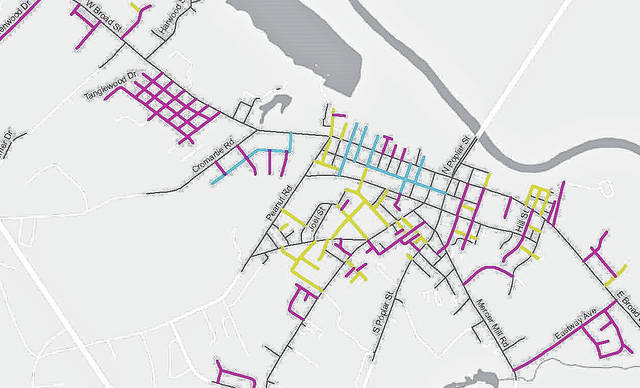
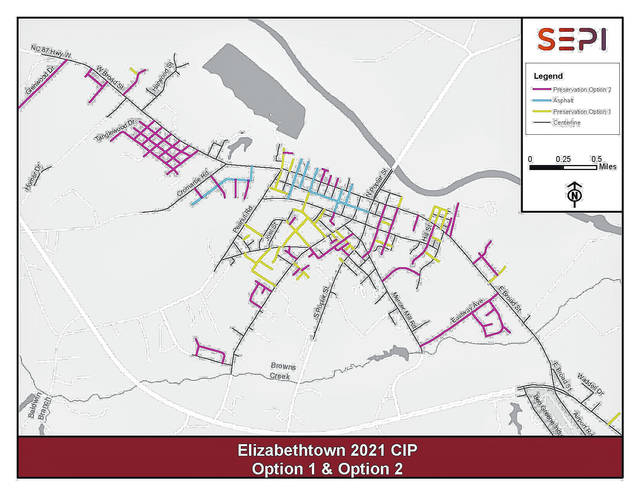
The first option is for about $500,000 and touches 5.9 miles of town streets, or roughly 24 percent. The second option would be inclusive of the first, stretching to about 17.85 miles of streets that represent 72.6 percent of the network.
SEPI recommends doing the work through three different kinds of contracts: patching, microsurfacing and contract resurfacing, the latter to include leveling. Other considerations are for funding to address routine maintenance (drainage, patching, crack seals); funding of future pavement preservation and resurfacing needs; and a plan for pavement evaluations on regular intervals of about every five years.
The first option has some leveling but is mostly patching and preservation.
The second option has more asphalt and some overlay. Milling and overlay is the most expensive, and the SEPI representatives said they would be willing to reevaluate segments getting those recommendations.
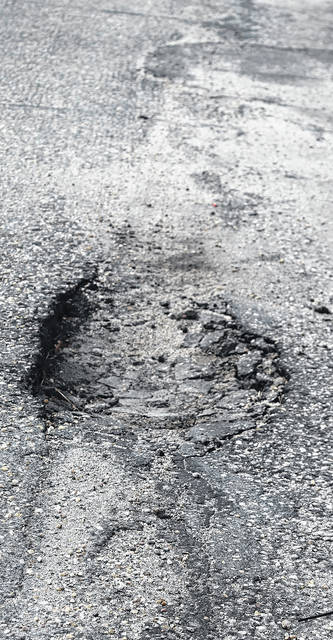
“I think that’s one of our citizens biggest complaints, is our roads,” Campbell said.
Councilman Rich Glenn asked about addressing roads that did not make the list, citing one in particular near his home. Corriher explained some might be picked up as the project moves along, but others could be designated if the town opts to not totally deplete its Powell Bill account.
“We recommend you take on streets like that as you go along if we can’t get them by stretching your dollars,” Corriher said.
Roper added, “And, if you look at that large swath of roads in the fair category, the longer you wait to touch them, the more expensive it’s going to be. That’s the consideration you have to balance.”
Madden, whose staff assisted as needed when SEPI made the analysis, said the report was “fair and objective. It’s been done by experts. It’s not based on local opinion.”
“What we have not recommended, and these guys have brought this up,” he said, “is depleting your fund balance you have in place. On average, we keep just a little over half-a-million dollars in the fund balance for Powell Bill funding here, recommending that you not draw that down at this point. That you simply utilize USDA funding to support option 1 and 2, and then use the annual appropriation from DOT going forward to support that annual payment on the USDA loan.”
The council will meet again on Monday for the primary purpose of considering a bridge naming, and choosing whether to offer support to it. The April meeting, due to Easter, is tentatively set to be held on April 12.
Leave a Reply